
05 Aug Healthy Daily Habits for Headaches: 5 Simple Changes
Healthy Daily Habits for Headaches: How Can I Build Better Habits to Prevent Headaches?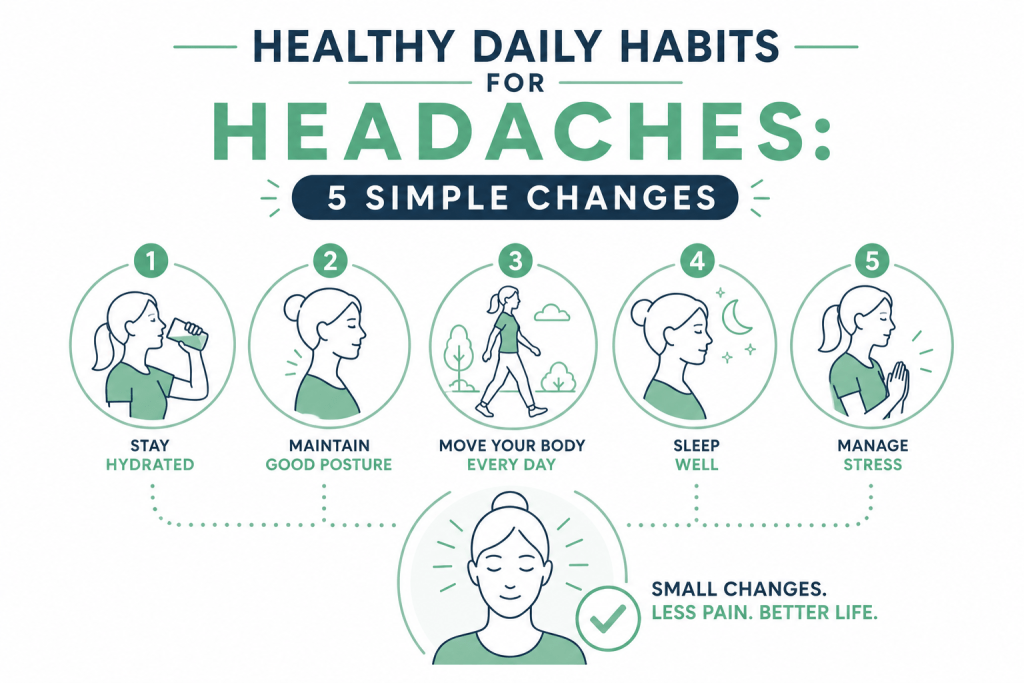
This Headaches Article is for You If…
- You experience recurring headaches throughout the week.
- Your headaches seem worse when life becomes busy or stressful.
- You’ve noticed your symptoms improve when you’re exercising, sleeping well or on holidays.
- You’re looking for practical strategies that fit into everyday life.
- You want to make small changes that may positively influence your long-term health.
- You’re ready to stop chasing quick fixes and begin building healthier habits.
Reading Time
Approximately 8 minutes.
You’ll Learn this about Headaches
- How your daily habits may influence recurring headaches.
- Why consistency matters more than perfection.
- Five simple habits that support better spinal health.
- Practical changes you can begin making immediately.
- Why small improvements often produce remarkable long-term results.
The Northcote Philosophy
Understand it.
Understanding why something is happening is the first step towards changing it.
Move better.
Your body was designed for movement. Small daily improvements matter.
Stay consistent.
Long-term health is usually the result of small things done repeatedly.
Trust your body again.
Our goal isn’t simply less pain. It’s helping you regain the freedom and confidence to live life well.
Continue Your Headaches Recovery Journey
These articles may also help:
- Chiropractic and Your Headaches: Causes, Types and Treatment
- Are My Headaches Coming From My Neck?
- Poor Posture Headaches: Can Poor Posture Cause Headaches?
- Is Movement More Important Than Perfect Posture?
- Why Do I Wake Up With Headaches?
- What Are the Best Exercises for Headache Relief?
- How Long Does It Take for Headaches to Improve?
Every article in our Headache Hub is designed to help you better understand your body, move better and trust it again.
Can Healthy Daily Habits Help Prevent Headaches?
Yes. Healthy daily habits may positively influence the frequency, intensity and persistence of recurring headaches. Often, it’s not one large change that makes the greatest difference. It’s the accumulation of small, consistent improvements performed every day.
Patients occasionally ask me:
“What’s the one thing I should do to stop my headaches?”
It’s a perfectly reasonable question.
Unfortunately, our bodies don’t usually work that way.
There’s rarely one magical exercise, one perfect pillow or one treatment that changes everything overnight.
Instead, I’ve observed something remarkably consistent over more than thirty-five years in practice.
The patients who do best long-term usually don’t make dramatic changes.
They make small changes consistently.
They begin:
- walking more often
- sleeping more consistently
- moving more regularly
- drinking more water
- exercising sensibly
- listening more carefully to their bodies.
Over time, these small decisions begin accumulating.
Eventually, they become habits.
Those habits often become healthier lives.
The Northcote Principle
Consistency will almost always beat perfection.
Why Do Small Daily Habits Matter?
Imagine depositing ten dollars into a savings account every day for several years.
Initially, the change appears insignificant.
Eventually, however, the accumulated result becomes remarkable.
Healthy habits work in much the same way.
One twenty-minute walk won’t change your life.
Neither will drinking an extra glass of water today.
However, twenty-minute walks performed hundreds of times over several years begin producing something quite extraordinary.
The same principle applies to:
- movement
- sleep
- nutrition
- exercise
- recovery
- stress management.
Your body is continually responding to the choices you make each day.
Fortunately, it usually doesn’t require perfection.
It simply appreciates consistency.
Greg’s Clinical Tip
I rarely ask patients to make ten changes simultaneously. Instead, I ask them to make one or two changes they genuinely believe they can maintain. Successful health habits aren’t usually dramatic. They’re sustainable.
What Five Daily Habits Support Better Headaches Health?
Let’s keep this simple.
Headaches Habit Number One – Move More Frequently
Your body loves movement.
Aim to:
- change positions regularly
- move every thirty to forty-five minutes
- walk whenever possible
- spend less time sitting uninterrupted.
Movement doesn’t need to be complicated to be effective.
Headaches Habit Number Two – Walk Every Day
Walking remains one of my favourite recommendations.
It’s:
- simple
- accessible
- inexpensive
- remarkably effective for overall health.
Aim for approximately twenty to thirty minutes each day whenever possible.
Consistency matters far more than perfection.
Headaches Habit Number Three – Prioritise Your Sleep
Sleep influences almost every aspect of our health.
Poor sleep may contribute to:
- increased physical sensitivity
- poorer recovery
- increased fatigue
- reduced exercise tolerance.
Healthy sleep habits include:
- maintaining consistent sleep times
- limiting screen time before bed
- prioritising adequate sleep whenever possible.
Headaches Habit Number Four – Listen to Your Body
Your body continually provides valuable information.
Begin paying attention to questions such as:
- What aggravates my headaches?
- What improves them?
- When do I feel my best?
- What changes when my symptoms improve?
Sometimes patients have been living with recurring symptoms for many years without ever asking these questions.
Your body is often an excellent teacher.
Headaches Habit Number Five – Stay Consistent
This may be the most important habit of all.
Consistency doesn’t mean perfection.
It simply means returning to healthy habits more often than unhealthy ones.
You don’t need seven perfect days each week.
You simply need more good days than bad ones over time.
What I Tell My Patients
Don’t become overwhelmed trying to change your entire life this week. Begin with one small improvement today. Long-term health is usually built one habit at a time.
Did You Know?
Research consistently demonstrates that regular physical activity, healthy sleep habits and sensible lifestyle practices positively influence overall health and wellbeing. Our bodies frequently respond remarkably well when small changes are introduced gradually and consistently.
Myth vs Fact
MYTH
Healthy habits only matter if I do them perfectly.
FACT
Consistency matters far more than perfection. Missing one walk or one workout isn’t failure. Healthy living is a lifelong practice rather than a short-term project.
Quick Self Assessment
Are Your Daily Habits Supporting Your Health?
Answer YES or NO.
- Do you walk most days?
- Are you moving every thirty to forty-five minutes?
- Are you sleeping well?
- Are you exercising regularly?
- Do you drink enough water each day?
- Are you listening to what your body is telling you?
Three or more NO answers suggests there may be opportunities to improve your daily habits gradually over time.
What Should You Do Next?
You don’t need to begin ten new habits tomorrow.
Instead, choose one.
Perhaps that’s:
- walking for twenty minutes
- drinking more water
- moving every forty-five minutes
- stretching before bed
- going to sleep slightly earlier tonight.
Small changes become meaningful changes when they’re repeated often enough.
Today’s Simple Daily for Headaches Prevention
Before tomorrow:
- Walk for twenty minutes.
- Drink another glass of water.
- Move every thirty to forty-five minutes.
- Stretch gently for five minutes.
- Spend five minutes reflecting upon what your body has been trying to tell you this week.
Small daily improvements matter.
Frequently Asked Questions about Headaches
Can healthy habits really help prevent headaches?
Healthy habits positively influence many of the factors associated with recurring headaches, including sleep, movement, stress management and recovery. While no single habit guarantees headache prevention, consistency often produces meaningful long-term benefits.
How long does it take to build healthier habits?
Everyone is different. Rather than focusing upon timelines, focus upon consistency. Small improvements repeated regularly will almost always outperform dramatic changes that aren’t sustainable.
Should I begin with exercise or movement?
Movement is usually an excellent place to begin. Walking, changing positions regularly and moving more frequently throughout the day are simple and sustainable strategies for many people.
What if I’ve struggled with healthy habits previously?
Begin smaller than you think you need to. Success usually begins with achievable goals rather than ambitious ones. One small improvement today is infinitely better than waiting for the perfect time to begin.
When should I seek professional advice?
If headaches are becoming more frequent, severe or are limiting your quality of life, a comprehensive assessment may help identify the factors contributing to your symptoms and guide appropriate management strategies.
Ready to Build Healthier Habits?
If recurring headaches are affecting your work, exercise or enjoyment of life, we’d love to help.
Book a comprehensive headache assessment at Northcote Chiropractic Centre and let’s begin by understanding what small daily improvements may make the greatest difference for your long-term health.
One Final Thought….
I’ve become increasingly convinced that most people dramatically underestimate what they’re capable of achieving over time.
We’re often searching for dramatic transformations when our bodies are usually asking for something much simpler.
Walk today.
Move a little more tomorrow.
Sleep a little better next week.
Keep showing up for yourself.
That’s usually enough.
Long-term health isn’t built in extraordinary moments.
It’s built quietly and consistently through ordinary days.
Never underestimate what one small improvement repeated hundreds of times can become.
Small daily improvements really do matter.
– Dr Greg Conlan (Chiro)