
22 Jul Poor Posture Headaches: Can Poor Posture Cause Headaches?
Poor Posture Headaches: Can Poor Posture Cause Headaches?
This Article is for You If…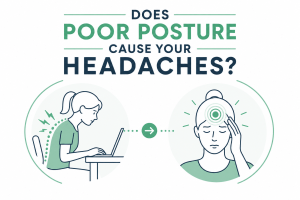
This article is for you if:
- Your headaches usually develop towards the end of the day.
- You spend several hours sitting at a computer.
- Your neck feels stiff after work.
- Your headaches improve when you’re moving or on holidays.
- You’re frustrated because the headaches keep returning.
- You want practical solutions rather than simply masking the symptoms.
- You’re beginning to wonder whether your daily habits are contributing to the problem.
Reading Time
Approximately 8 minutes.
You’ll Learn
- Can poor posture really cause headaches?
- Why movement may matter more than perfect posture.
- How your daily habits influence the health of your neck.
- What practical changes you can begin making today.
- When to seek professional advice.
The Northcote Chiropractic Philosophy
Understand it.
Understanding why something is happening is the first step towards changing it.
Move better.
Your body was designed for movement. Small daily improvements matter.
Stay consistent.
Long-term health is usually the result of small things done repeatedly.
Trust your body again.
Our goal isn’t simply less pain. It’s helping you regain the freedom and confidence to live life well.
Continue Your Headache Recovery Journey
New to our headache series? These articles may also help:
- Chiropractic and Your Headaches: Causes, Types and Treatment
- Are My Headaches Coming From My Neck?
- Why Do I Wake Up With Headaches? (Coming soon)
- What Are the Best Exercises for Headache Relief? (Coming soon)
- How Long Does It Take for Headaches to Improve? (Coming soon)
Every article is designed to help you better understand your body, move better and trust it again.
Can you get Poor Posture Headaches?
Yes. Poor posture can contribute to headaches, particularly when it places prolonged stress on the muscles and joints of the neck and upper back. However, posture isn’t simply about sitting perfectly. It’s about movement, strength, endurance and the daily habits that influence how your body functions.
When patients ask me whether poor posture is causing their headaches, I rarely begin by looking at how they’re sitting.
Instead, I usually ask:
“Tell me what your day looks like.”
Do you sit for eight hours?
Do you regularly take movement breaks?
What happens when you’re on holidays?
Do your headaches improve after exercise?
The answers to these questions are often far more revealing than posture itself.
After more than 35 years in practice, I’ve become less interested in whether someone is sitting perfectly and far more interested in how long they’ve been sitting.
Your body is remarkably forgiving.
It simply wasn’t designed to remain in the same position all day.
The Northcote Chiropractic Principle
The best posture isn’t perfect posture—it’s your next posture.
What Exactly Is Poor Posture?
This may surprise you, but I don’t believe there is one perfect posture.
Social media has convinced many people that good posture means:
- shoulders back
- chest out
- sitting perfectly upright
- maintaining ideal spinal alignment all day long.
The reality is much more encouraging than that.
Good posture isn’t usually about perfection.
It’s about:
- movement
- variety
- endurance
- strength
- recovery
- regular position changes.
Your neck doesn’t particularly care whether you’re sitting or standing.
What it does care about is how long you’ve been doing it.
Sitting isn’t the enemy.
Standing isn’t the solution.
Remaining still for prolonged periods is often the bigger problem.
Greg’s Clinical Tip
After 35 years in practice I’ve become less interested in how patients are sitting and far more interested in how long they’ve been sitting. I’ve treated office workers, builders, teachers and farmers with remarkably similar headaches. Their occupations were different. Their bodies weren’t moving enough. Small movement breaks throughout the day often become one of the simplest and most effective strategies we discuss.
How Can You Get Poor Posture Headaches?
Let’s look at what happens during a typical working day.
Imagine this scenario.
You arrive at work at 8:30am.
You sit for two hours.
You answer emails.
You spend another hour in meetings.
You eat lunch at your desk.
By 3pm your neck feels tight.
By 5pm you’ve developed a headache.
By 8pm you’re reaching for pain medication.
The following morning, you repeat exactly the same routine.
Sound familiar?
The headache didn’t suddenly appear at 5pm.
Your body was gradually telling you throughout the day that it needed something different.
Poor posture headaches often develop because of:
- prolonged sitting
- muscle fatigue
- neck stiffness
- reduced movement
- workplace habits
- prolonged screen time
- accumulated daily stress
- poor recovery habits.
The headache is frequently the final chapter of a story that began many hours earlier.
Why Do Computers and Phones Contribute to Poor Posture Headaches?
Modern life is placing demands on our bodies that simply didn’t exist thirty years ago.
Many of us now spend:
- 8-10 hours sitting each day (recreationally as well as occupationally)
- several hours looking at screens. The Australian Bureau of Statistics says our teenagers are spending over 4 hours per day on screens.
- additional time scrolling on our phones. The Australian Tech Guide says the average Australian spends 5.5 hours on their phone alone!
- less time moving than previous generations. Who walks to school or work these days?
Our necks are remarkably adaptable.
However, they still appreciate movement.
One of the questions I regularly ask patients is:
“What happens when you go away on holidays?”
It’s remarkable how often I hear:
“My headaches almost disappear.”
Their arthritis didn’t disappear.
Their MRI didn’t change.
Their pillow came with them.
Usually, what’s changed is this:
- they’re walking more
- they’re sitting less
- they’re sleeping better
- they’re moving differently
- they’re recovering more effectively.
Sometimes the answer isn’t a better chair.
It’s a better relationship with movement.
What I Tell My Patients about Poor Posture Headaches
I don’t spend much time teaching patients to sit perfectly. I spend far more time teaching them to move more often. Your body is incredibly adaptable and forgiving. The goal isn’t to achieve perfect posture. The goal is to avoid remaining in any one posture for too long.
Did You Know?
Research consistently demonstrates that regular movement breaks throughout the working day improve comfort and reduce musculoskeletal symptoms. Even short periods of movement may help reduce the physical demands prolonged sitting places upon the neck and upper back.
Myth vs Fact
MYTH
Good posture means sitting perfectly straight all day.
FACT
There is no single perfect posture that should be maintained for eight uninterrupted hours. Healthy movement throughout the day is usually more important than maintaining one ideal position.
Quick Self Assessment
Could Your Daily Habits Be Contributing to Your Poor Posture Headaches?
Answer YES or NO.
- Do your headaches develop towards the end of the day?
- Are they worse after prolonged computer work?
- Does walking improve your symptoms?
- Do your headaches improve during weekends or holidays?
- Do you spend more than six hours sitting each day?
- Do you regularly experience neck stiffness?
Three or more YES answers suggests your daily habits and posture may be contributing to your symptoms.
What Should You Do Next?
If you answered YES to three or more questions, don’t panic.
Your body is remarkably adaptable and many posture-related headaches respond well to relatively simple changes in movement habits, exercise and appropriate treatment.
Begin by:
- moving every 30 to 45 minutes
- walking every day
- paying attention to what aggravates your symptoms
- noticing when your headaches improve
- prioritising movement throughout your day.
Remember, understanding the cause of your headaches is always the first step towards improving them.
Today’s Simple Daily
Before tomorrow:
- Move every 30 to 45 minutes.
- Walk for at least twenty minutes today.
- Drink more water.
- Spend less time looking down at your phone.
- Take one phone call while standing or walking.
- Finish the day with five minutes of gentle stretching.
Small daily improvements matter.
Frequently Asked Questions
Can poor posture really cause headaches?
Yes. Poor posture headaches commonly develop when prolonged positions place stress upon the muscles and joints of the neck and upper back. More importantly, however, it is often the combination of posture, movement habits and daily activities that contribute to recurring symptoms.
Are standing desks better for headaches?
Standing desks can certainly be helpful. However, standing continuously isn’t necessarily better than sitting continuously. Regular movement throughout the day remains one of the most important factors for spinal health.
Why are my headaches worse at work?
Many work environments encourage prolonged sitting, screen use and repetitive activities. These factors may contribute to muscle fatigue and neck stiffness, particularly when movement breaks become infrequent.
Should I worry about having poor posture?
No. Most people don’t need perfect posture. They simply need more movement throughout their day. Your body is remarkably adaptable and often responds very positively to small, consistent lifestyle changes.
When should I seek professional advice?
If your headaches are severe, changing significantly, occurring more frequently or interfering with your quality of life, a comprehensive assessment may help determine whether your neck, posture or other contributing factors require further investigation.
Ready to Better Understand Your Headaches?
If recurring headaches are preventing you from enjoying work, exercise or time with your family, we’d love to help.
Book a comprehensive headache assessment at Northcote Chiropractic Centre and let’s begin by understanding why your headaches are occurring and what practical steps may help you move towards lasting improvement.
One Final Thought….
After more than 35 years in practice I’ve become increasingly convinced that our bodies are far more resilient than we give them credit for.
Many patients arrive convinced they have terrible posture or that they’ve somehow damaged themselves through years of sitting incorrectly.
Thankfully, that’s rarely the whole story.
Your body isn’t fragile.
It responds remarkably well to movement, consistency and sensible daily habits.
Don’t become distracted chasing perfect posture.
Instead, begin chasing small daily improvements.
Stand up a little more often.
Walk a little further.
Move a little better.
Because recovery is rarely about finding one perfect solution.
It’s usually about doing the simple things consistently over time.
Small daily improvements really do matter.
– Dr Greg Conlan