
10 Aug Waking Up With Headaches: Why Does it Happen?
Waking Up With Headaches: Why Does It Happen?
This Article is for You If…
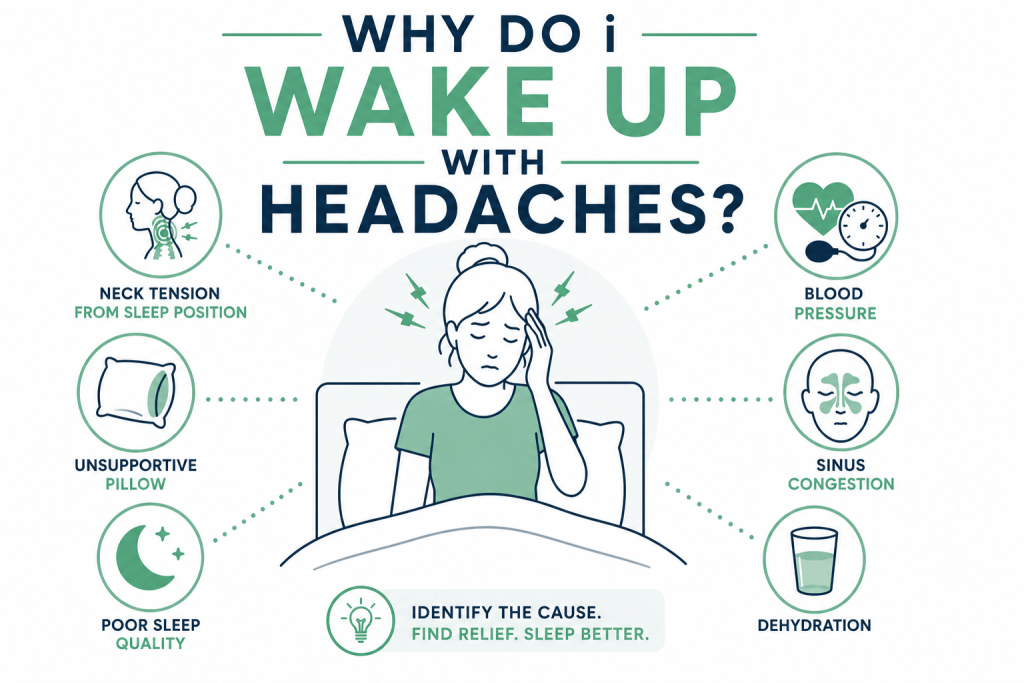
This article is for you if:
- You regularly wake with a headache.
- Your neck feels stiff first thing in the morning.
- You find yourself stretching your neck as soon as you get out of bed.
- Your headaches improve once you’ve been moving for thirty to sixty minutes.
- You’re wondering whether your pillow or sleeping position is contributing to the problem.
- You’ve become frustrated because your mornings are beginning with pain rather than feeling refreshed.
Reading Time
Approximately 9 minutes.
You’ll Learn
- Why waking up with headaches occurs.
- Whether your neck, sleeping position or daily habits may be contributing.
- What role your pillow may play.
- Practical strategies that may help improve your mornings.
- When it’s time to seek professional advice.
The Northcote Philosophy
Understand it.
Understanding why something is happening is the first step towards changing it.
Move better.
Your body was designed for movement. Small daily improvements matter.
Stay consistent.
Long-term health is usually the result of small things done repeatedly.
Trust your body again.
Our goal isn’t simply less pain. It’s helping you regain the freedom and confidence to live life well.
Continue Your Headache Recovery Journey
These articles may also help:
- Chiropractic and Your Headaches: Causes, Types and Treatment
- Are My Headaches Coming From My Neck?
- Poor Posture Headaches: Can Poor Posture Cause Headaches?
- Is Movement More Important Than Perfect Posture?
- Healthy Daily Habits for Headaches: How Can I Build Better Habits to Prevent Headaches?
- What Are the Best Exercises for Headache Relief?
- How Long Does It Take for Headaches to Improve?
Every article in our Headache Hub is designed to help you better understand your body, move better and trust it again.
Why Do I Wake Up With a Headache?
Waking up with headaches is surprisingly common. In many cases, factors such as neck stiffness, sleeping position, muscle tension, poor sleep quality and daily movement habits may contribute to morning symptoms. Understanding why your headaches occur is often the first step towards improving them.
Many patients tell me:
“I feel fine when I go to bed, but I wake up with a headache.”
Others say:
“I know it’s going to be a bad day because my headache is there before my feet even touch the floor.”
Although morning headaches can be frustrating, they’re often giving us useful information.
The timing matters.
If your symptoms are consistently worse first thing in the morning, it’s worth asking:
- What changes overnight?
- What position am I sleeping in?
- Is my neck stiff when I wake?
- Am I sleeping well?
- Do my symptoms improve once I start moving?
Fortunately, answering these questions frequently provides valuable clues.
The Northcote Principle
Your body is usually trying to tell you something. Learning to listen matters.
Can My Neck Cause Waking Up With Headaches?
Yes, it can.
The neck is a common contributor to waking up with headaches that I see in clinical practice.
Patients often describe:
- neck stiffness upon waking
- pain at the base of the skull
- headaches that spread towards the temples
- symptoms that improve after a warm shower
- discomfort that settles once they’ve been moving for a while.
These symptoms don’t necessarily mean something serious is occurring.
Instead, they may simply suggest that your neck isn’t particularly happy about what happened overnight.
Several factors may contribute, including:
- prolonged sleeping positions
- reduced neck mobility
- muscular tension
- inadequate pillow support
- previous neck injuries
- poor sleep quality.
Importantly, waking up with headaches rarely occurs in isolation. Instead, it’s usually one piece of a much larger story involving movement, sleep and overall health.
Greg’s Clinical Tip
One of the questions I always ask patients is, “What happens to your headache thirty minutes after getting out of bed?” If they tell me their symptoms improve significantly after moving around, their body has often provided us with an important clue. Movement frequently changes the story.
Can My Sleeping Position Cause Waking Up With Headaches?
Potentially, yes.
Although there isn’t one perfect sleeping position for everyone, some positions are generally kinder to your neck than others.
For example, many people feel more comfortable sleeping:
- on their back
- on their side with appropriate pillow support.
Conversely, prolonged stomach sleeping often places the neck in a rotated position for several hours.
That doesn’t mean stomach sleeping is harmful for everyone. However, if you’re consistently waking with headaches and neck stiffness, it’s worth considering whether your sleeping position may be contributing.
Once again, we’re not searching for perfection.
We’re simply looking for clues.
Does My Pillow Cause Waking Up With Headaches?
This is probably one of the most common questions patients ask.
My answer is usually:
“Perhaps—but probably not by itself.”
Patients are frequently disappointed when I don’t immediately recommend purchasing an expensive pillow.
The truth is that pillows matter. However, they’re rarely the entire explanation.
A pillow should simply help your neck remain reasonably comfortable while you’re sleeping.
The right pillow for you depends upon several factors, including:
- your body shape
- your preferred sleeping position
- shoulder width
- mattress firmness
- personal comfort preferences.
Unfortunately, there’s no such thing as the perfect pillow for everyone.
If you’ve purchased four different pillows during the past twelve months, the problem may not necessarily be the pillow itself.
Sometimes we become so focused on what happens during eight hours of sleep that we forget about the remaining sixteen hours of our day.
What If My Headaches Improve Once I Start Moving?
This is one of my favourite clinical questions.
Patients frequently tell me:
“It’s always worse when I wake up, but it’s much better after my morning walk.”
That information matters enormously.
Movement changes many things, including:
- circulation
- muscular activity
- joint mobility
- physical confidence
- overall comfort.
Consequently, if your symptoms consistently improve after moving, your body may be quietly suggesting that movement forms part of the solution.
Remember what we’ve discussed throughout this series.
Your body was designed for movement.
It usually appreciates opportunities to do exactly that.
Any Other Common Causes?
Tension, stress, sinus congestion and dehydration are other common causes that can be remedied. People with blood pressure issues are at risk of morning headaches due to a natural diurnal rise in blood pressure in the waking hours combined with a wearing out of medications from the night before. The rise in blood pressure causes an incrase in the skull (intracranial) pressure and presents as headache. Migraine sufferers are also at a risk of morning headache since there canbe an association with vascular changes of expansion and contraction.
There are of course more serious causes of morning headache that we need to think about. While not common, brain tumours and strokes can also present with morning headaches.
What I Tell My Patients
Don’t become distracted searching for one thing that’s causing your headaches. Instead, become curious. Ask better questions. What improves them? What aggravates them? What changes when you sleep differently or move more? Your body frequently provides remarkably helpful answers.
Did You Know?
Morning headaches may occur for many different reasons. Sleep quality, muscular tension, neck discomfort, movement habits and other health factors can all contribute. Understanding patterns within your symptoms frequently provides valuable information during a comprehensive assessment.
Myth vs Fact
MYTH
Waking up with headaches means my pillow is causing the problem.
FACT
Your pillow may contribute to symptoms. However, waking up with headaches is often influenced by multiple factors including sleep quality, neck function, movement habits and recovery.
Quick Self Assessment
Is Your Neck Contributing to Your Morning Headaches?
Answer YES or NO.
- Do you regularly wake with headaches?
- Does your neck feel stiff first thing in the morning?
- Do your symptoms improve after moving around?
- Are your headaches worse after poor sleep?
- Do you regularly wake feeling tired or unrested?
- Are your headaches becoming more frequent?
Three or more YES answers suggests there may be value in having your symptoms comprehensively assessed.
What Should You Do Next?
Before tomorrow morning consider trying the following:
- spend twenty minutes walking today
- avoid prolonged sitting before bed
- perform five minutes of gentle stretching in the evening
- pay attention to how your headache changes after moving
- consider whether your sleeping position influences your symptoms.
Remember, patterns matter.
Your body is continually providing useful information.
Today’s Simple Daily
Before tomorrow:
- Walk for twenty minutes.
- Stretch gently before bed.
- Move regularly throughout the day.
- Pay attention to how you feel when you wake tomorrow.
- Notice whether movement improves your symptoms.
Small daily improvements matter.
Frequently Asked Questions
Are waking up with headaches common?
Yes. Morning headaches are relatively common and may occur for many different reasons. Understanding when they occur, what aggravates them and what improves them frequently provides valuable information when determining the factors contributing to your symptoms.
Should I buy a new pillow?
Perhaps, but not necessarily. Pillows certainly matter. However, they rarely explain recurring headaches by themselves. A comprehensive assessment should always consider sleep quality, neck function, movement habits and overall health.
Why are my headaches better after a hot shower?
Warmth and gentle movement frequently improve muscular comfort and mobility. Consequently, some people notice their symptoms improve once they begin moving and warming their bodies during the morning.
Can neck problems cause morning headaches?
Yes. Neck stiffness and muscular tension may contribute to headaches that are particularly noticeable when waking. Many patients also report that their symptoms improve after they’ve been moving for a short period of time.
When should I seek professional advice?
If you’re regularly waking with headaches, your symptoms are worsening or they’re affecting your quality of life, a comprehensive assessment may help identify the factors contributing to your symptoms.
Ready to Better Understand Your Morning Headaches?
If waking up with headaches is affecting your mornings, we’d love to help.
Book a comprehensive headache assessment at Northcote Chiropractic Centre and let’s begin understanding why your headaches occur and what practical strategies may help improve them.
One Final Thought….
I’ve discovered that our bodies are remarkably good communicators.
The challenge is that we’re not always particularly good listeners.
Sometimes our bodies whisper.
Occasionally they speak loudly.
Recurring symptoms are often invitations to become curious rather than fearful.
Ask better questions.
Pay attention to patterns.
Keep moving.
Sleep well.
Remain patient with yourself.
Because understanding your body is rarely about finding one perfect answer.
It’s usually about learning to recognise the small clues it provides each day.
Small daily improvements really do matter.
– Dr Greg Conlan