
25 Nov Lower Back Pain Treatment – A Chiropractic Guide
Lower Back Pain Treatment: Why It Is Needed and How We Can Help
Lower back pain treatment is one of the most common reasons people seek healthcare. It can affect almost everything you do, from getting out of bed and putting on your shoes to sitting at work, exercising, playing golf or enjoying time with your family. 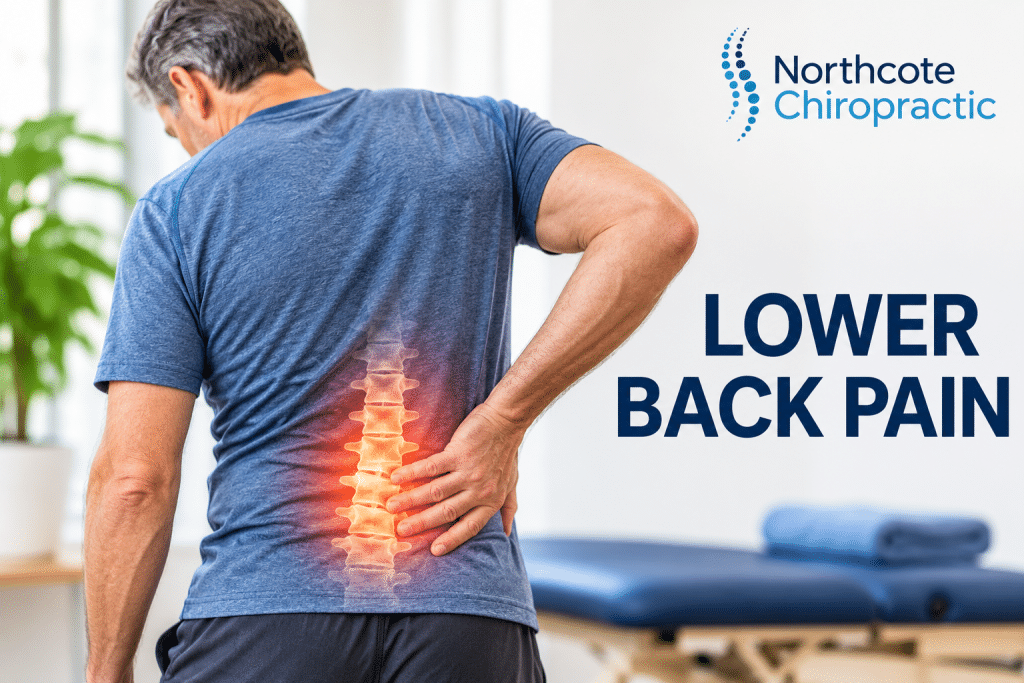 If you are experiencing lower back pain, you are certainly not alone. It is estimated that most adults will experience an episode of back pain at some point in their lives. The good news is that many cases of lower back pain can be managed successfully with appropriate assessment, treatment and rehabilitation. At our chiropractic centres, we regularly help people experiencing lower back pain. Our approach to lower back pain treatment involves understanding what may be contributing to your symptoms, identifying the factors affecting your movement and function, and developing an appropriate plan to help you recover. Our goal is not simply to reduce your pain. We want to help you get back to doing the things you enjoy. Learn how to trust your back again.
What Does Lower Back Pain Feel Like?
Lower back pain can present in many different ways. For some people, it develops suddenly following an injury or awkward movement. For others, it gradually develops over weeks or months. Most back pain does not have an identifiable causee Common symptoms include:
- A dull ache or persistent discomfort across the lower back.
- Sharp pain when bending, twisting or lifting.
- Stiffness, particularly first thing in the morning.
- Pain when sitting or standing for prolonged periods.
- Difficulty getting comfortable in bed or changing positions.
- Muscle tightness or spasms.
- Pain extending into the buttocks or hips.
- Pain travelling down one or both legs.
Some people experience relatively mild discomfort, while others find that their pain significantly interferes with everyday activities. Understanding the nature of your symptoms is an important first step in determining what may be causing your problem.
What Causes Make Lower Back Treatment Necessary?
There isn’t always one simple explanation for lower back pain. The lower back is a complex structure involving vertebrae, discs, joints, muscles, ligaments and nerves. Pain can arise from several different structures, and multiple factors may contribute to the same problem. Here are some of the more common presentations we encounter.
1. Muscular Strain and Soft Tissue Problems
Muscular strains can occur following lifting, bending, twisting, sporting activities or unfamiliar physical exertion. Sometimes the injury is obvious. On other occasions, discomfort develops gradually following repeated activities or prolonged physical demands. Symptoms may include localised tenderness, muscle tightness, stiffness and pain when moving.
2. Joint Irritation and Restricted Movement
The small joints between the vertebrae, known as facet joints, help guide and control spinal movement. These joints can become painful or irritated, particularly when exposed to excessive loading or certain movements. People may experience localised lower back pain, stiffness and discomfort when extending or rotating their spine.
3. Disc-Related Problems
The discs between the vertebrae act as cushions and help distribute forces through the spine. Disc-related problems can include disc degeneration, disc bulges and herniation’s. In some cases, a disc problem may cause localised lower back pain. In others, it can irritate nearby nerve structures and produce symptoms extending into the buttock or leg. Importantly, disc changes are also common in people who have no back pain at all. Imaging findings must be interpreted alongside your symptoms and examination. Isolated images rarely give us a complete picture.
4. Sciatica and Nerve Irritation
Sometimes lower back pain is accompanied by pain travelling down the buttock and leg. This may occur when a nerve root in the lower spine becomes irritated or compressed. Symptoms can include:
- Pain travelling down the leg.
- Tingling or pins and needles.
- Numbness.
- Burning or electric-shock sensations.
- Muscle weakness in more significant cases.
This type of presentation requires an appropriate neurological assessment.
5. Age-Related Changes and Osteoarthritis
As we get older, changes occur in the discs, joints and other structures of the spine. These changes are a normal part of ageing, although they do not always cause symptoms. When they are associated with pain and stiffness, people may notice difficulty bending, standing for long periods or getting moving after sitting. The important thing to understand is that getting older does not automatically mean you have to accept persistent back pain. Maintaining strength, mobility and physical activity can play an important role in managing many age-related musculoskeletal problems.
6. Lifestyle and Physical Conditioning
Our everyday habits can influence how well our backs tolerate physical demands. Contributing factors may include:
- Prolonged sitting and limited movement.
- Reduced muscular strength and endurance.
- Sudden increases in exercise or physical activity.
- Repetitive lifting or bending.
- Poor recovery between demanding activities.
- Inadequate general physical conditioning.
These factors don’t necessarily cause back pain on their own, but they may contribute to the development or persistence of symptoms.
How Do We Work Out What Lower Back Pain Treatment You Need?
This is where an appropriate chiropractic assessment becomes important. Rather than simply focusing on where it hurts, we want to understand your symptoms, investigate the possible contributing factors and determine the most appropriate management approach. An assessment may involve several components.
Understanding Your History
We begin by discussing your problem. We want to know:
- When did the pain start?
- Was there a specific injury or did it develop gradually?
- Where exactly do you experience the pain?
- Does it travel into your buttocks or legs?
- Which movements or activities make it worse?
- Have you experienced similar problems previously?
- How is the pain affecting your everyday activities?
Your answers help us understand the nature of your condition and determine what needs to be examined.
Examining Your Spinal Movement
We assess how your lower back moves. This may involve examining your ability to bend forwards, backwards and sideways, as well as assessing spinal and hip movement. We also look for movements that reproduce your symptoms or reveal restrictions that may be contributing to your difficulties.
Assessing Muscles and Joints
Depending on your presentation, we may assess:
- Spinal joint movement.
- Hip and pelvic mobility.
- Muscular strength and endurance.
- Soft tissue tenderness.
- Movement coordination.
- Functional movements such as bending and squatting.
This helps us build a clearer picture of your physical capabilities and potential contributing factors.
Checking Nerve Function
If you have pain travelling into your leg, numbness, tingling or weakness, we may perform a neurological examination. This can include testing muscle strength, sensation and reflexes to identify possible nerve involvement. If the findings suggest a more significant neurological problem, further medical investigation or referral may be necessary.
How Chiropractic Helps Lower Back Pain Treatment?
Once we have assessed your condition, we can discuss the treatment options that may be appropriate. There is no single treatment that suits everyone. Your management plan should reflect the nature of your problem, your examination findings, medical history and personal goals. Depending on your presentation, treatment may include the following.
Chiropractic Adjustments and Manual Therapy
Chiropractic adjustments and other manual therapy techniques may be appropriate for some people experiencing lower back pain. These techniques are intended to help improve movement and reduce discomfort. The type of technique used depends on your individual presentation, and treatment is modified where necessary to ensure it is appropriate.
Soft Tissue Treatment
Muscles surrounding the lower back, hips and pelvis can contribute to discomfort and restricted movement. Appropriate soft tissue techniques may be used to address muscular tenderness, tension and movement restrictions.
Exercise Rehabilitation
Exercise is an important component of managing many lower back problems. Depending on your needs, we may recommend exercises designed to improve:
- Core and trunk muscular strength.
- Back and abdominal endurance.
- Hip and pelvic mobility.
- Gluteal muscle strength.
- Flexibility and movement control.
Exercises are selected according to your current abilities and progressed as your condition improves. The objective is to help your body become stronger and better able to tolerate everyday physical demands.
Practical Advice and Activity Modification
Sometimes, small changes to your daily routine can make a difference. We may discuss:
- How to manage sitting and standing throughout the day.
- Appropriate lifting and bending strategies.
- How to modify exercise during recovery.
- How to gradually return to normal activities.
- Ways to maintain movement without unnecessarily aggravating your symptoms.
Importantly, prolonged bed rest is generally not recommended for uncomplicated lower back pain. Maintaining appropriate levels of activity is usually beneficial.
Should You Stop Exercising As Part Of Your Lower Back Pain Treatment?
This is a question we hear frequently. Many people become concerned that exercising will make their back worse. As a result, they stop walking, going to the gym, playing sports or participating in other activities they enjoy. While certain movements may need to be modified during an acute episode, avoiding all activity is rarely the best long-term solution. For most people with uncomplicated lower back pain, maintaining appropriate movement and gradually returning to exercise is beneficial. Depending on your symptoms, this might include:
- Walking.
- Gentle mobility exercises.
- Appropriate strengthening exercises.
- Swimming or water-based exercise.
- Gradually returning to your normal fitness routine.
The key is to find the right starting point and progress gradually. If you are unsure which activities are suitable, an assessment can help determine how best to approach your recovery.
What If Your Lower Back Pain Keeps Coming Back?
Recurring lower back pain can be frustrating. You might experience an episode, receive treatment, feel better and then find that the same problem returns several weeks or months later. There can be several reasons for this. Perhaps your muscular strength and endurance haven’t fully recovered. Maybe your physical activity levels have changed, or you are regularly exposing your back to demands it is not yet conditioned to manage. In other cases, there may be an underlying condition that requires further investigation or a different management approach. This is why we believe good care should look beyond temporary symptom relief. Our aim is to help you understand your problem, improve your physical capabilities and develop strategies to manage your back over the longer term.
When Should You Seek Help for Lower Back Pain?
If your back pain is persistent, recurring, worsening or interfering with your everyday activities, it is worth having it assessed. You should also seek an appropriate medical assessment if you experience:
- Persistent pain that is not improving.
- Pain following a significant accident or injury.
- Unexplained weight loss, fever or feeling generally unwell alongside back pain.
- Significant or progressive weakness in your legs.
- Persistent numbness or altered sensation.
Important: New loss of bladder or bowel control, numbness around the groin or saddle area, or rapidly progressing leg weakness can indicate a serious spinal emergency. Seek emergency medical attention immediately. An assessment helps determine whether chiropractic care is appropriate or whether further medical investigation is needed.
Don’t Let Lower Back Pain Stop You Doing the Things You Enjoy
Lower back pain can be frustrating, particularly when it prevents you from enjoying activities that are important to you. Whether you want to return to the gym, enjoy a round of golf, go for a walk, play with your grandchildren or simply get through your working day comfortably, improving your back function can make a significant difference. At our chiropractic centres, we regularly assess and manage people experiencing lower back pain. We take the time to understand your problem, explain our findings and develop an appropriate approach to help you improve. Our care may involve chiropractic treatment, manual therapy, exercise rehabilitation and practical advice, depending on your individual needs. You don’t have to simply put up with back pain or assume it is an inevitable part of getting older. If lower back pain is affecting your life, contact our team and arrange an assessment. Let’s find out what may be contributing to your problem and discuss how we can help you get moving again.
Frequently Asked Questions About Lower Back Pain Treatment
Can a chiropractor help with lower back pain?
Chiropractors assess and manage a range of musculoskeletal conditions, including many presentations of lower back pain. Depending on your individual condition, care may include chiropractic adjustments, manual therapy, exercise rehabilitation and advice. An initial assessment helps determine whether chiropractic treatment is appropriate.
How long does lower back pain take to improve?
This depends on the cause, severity and duration of your symptoms. Some acute episodes improve within a few weeks, while persistent or more complex conditions may require a longer period of management and rehabilitation.
Is lower back pain a normal part of getting older?
Changes in the spine are common as we age, but persistent pain should not simply be accepted as inevitable. Maintaining physical activity, strength and mobility can help support spinal health and everyday function.
Should I have an X-ray or MRI as part of my lower back pain treatment?
Not necessarily. Most uncomplicated episodes of lower back pain do not require immediate imaging. However, imaging may be appropriate when there is a suspected serious underlying condition, significant neurological involvement or symptoms that require further investigation.
Can lower back pain be caused by tight hip muscles?
Reduced hip mobility or muscular problems around the hips can contribute to altered movement and physical loading. However, hip tightness is not necessarily the cause of lower back pain. An assessment can help determine whether these factors are relevant.
Is walking a useful component of lower back pain treatment?
For many people, walking is a useful form of gentle physical activity during recovery. It helps maintain movement and general conditioning. The distance and intensity should be adjusted to suit your symptoms and gradually increased as your tolerance improves.
How can I prevent lower back pain from returning?
Although recurrence cannot always be prevented, maintaining regular physical activity, improving strength and endurance, managing physical workloads and avoiding sudden increases in activity may help reduce the likelihood of future episodes.